How altitude changes the exterior wood finish schedule
How elevation, not just Colorado's sun, shortens the working life of an exterior wood finish on the Front Range, and what that means for the finish schedule on thermally modified wood.
5.0 on Google across 80+ verified reviews
Altitude is the reason the finish schedule changes here, not just Colorado sun in general. Thinner air filters out less ultraviolet light, so wood at elevation absorbs more UV energy per hour than identical wood under identical sun at sea level. Above five thousand feet, a finish rated for a multi-year cycle can need reapplication well before that cycle is up.
That distinction matters more than it sounds like it should. Plenty of low-elevation places get strong, direct sun without seeing this kind of early finish failure. What is different on the Front Range is the air itself, and it changes the schedule regardless of how many clear days a given summer happens to have.
Why thinner air changes the math
Every layer of atmosphere between the sun and a piece of wood absorbs and scatters some ultraviolet light before it arrives. At sea level there is more of that atmosphere in the way. At five thousand feet, where Denver and most of the Front Range sit, and higher still up toward the foothills, there is measurably less of it. How much more UV gets through depends on how it is measured, but the direction never changes: the higher the yard, the harder the sun works on the wood.
The effect does not wait for a cloudless day. Thinner air filters out less UV whether or not the sky is fully clear, so a finish exposed to identical hours of daylight absorbs more energy here than the same finish would in a coastal city, even on a hazy or overcast afternoon. Annual sunshine totals matter less than how much of the sun that does arrive reaches the wood once the atmosphere has finished filtering it, and that is the part general advice about strong Colorado sun tends to miss.
Add the temperature swing that comes with the same thin, dry air, and a Front Range exterior finish is working against two forces at once. That air cools quickly once the sun drops, and during shoulder season the temperature can cross freezing twice in a day. UV breaks a finish down chemically. Expansion and contraction breaks it down mechanically. Altitude raises the dose on both.
What a sea-level finish rating runs into here
Most exterior wood finishes carry a service life that was tested somewhere near sea level, because that is where most of the country's finish testing happens. A stain or oil rated for a multi-year cycle in that environment is not being pushed particularly hard by the atmosphere. Asked to do the same job at five thousand feet and above, it absorbs more UV energy across the same number of daylight hours, and the visible result, fading, yellowing, and surface chalking, shows up sooner than the rating suggests. The rating was earned in a milder environment than the one the finish is now standing in.
Thermal modification and the finish schedule
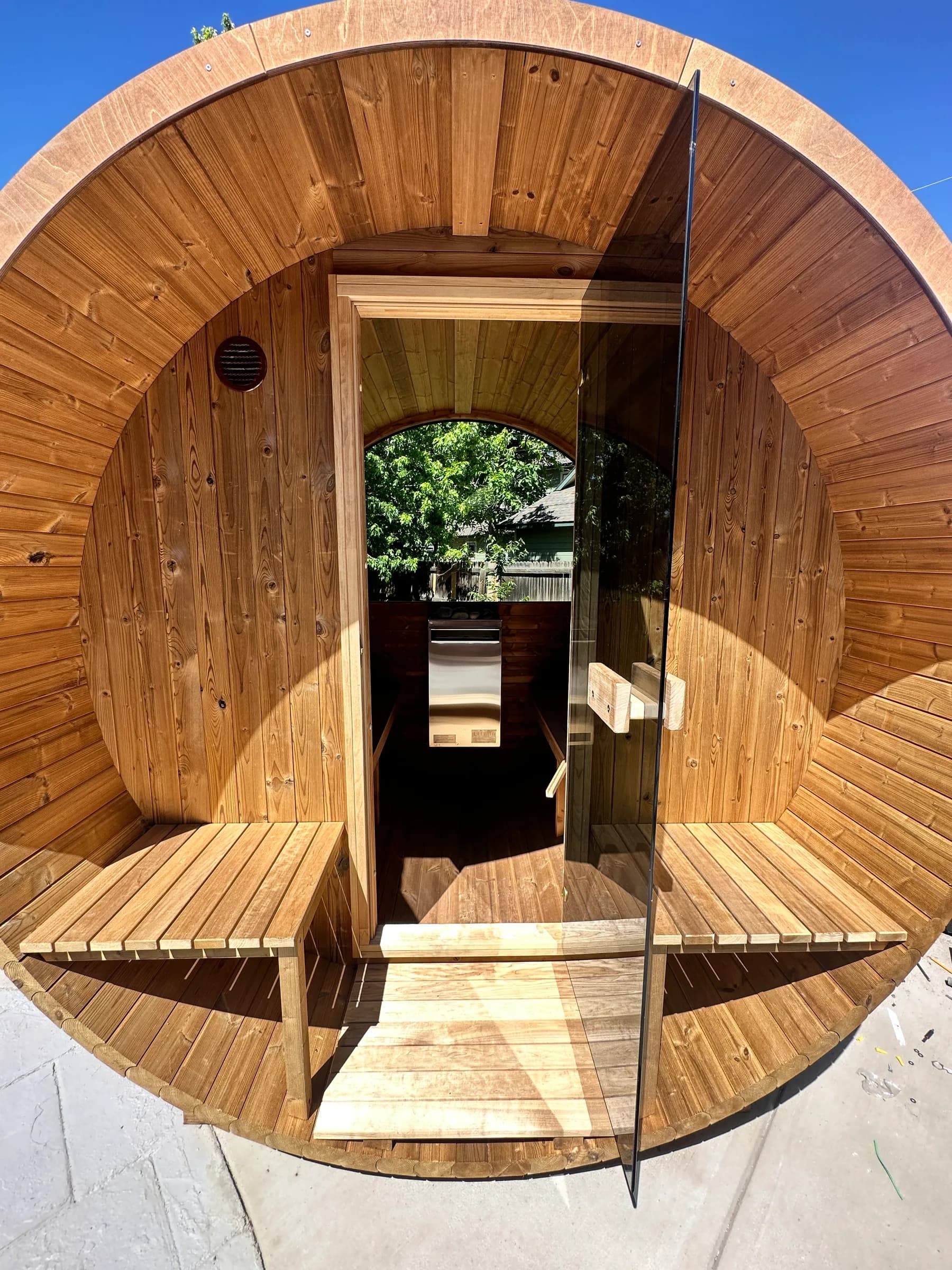
Thermally modified wood outperforms cedar for outdoor use in Colorado. It is more dimensionally stable, more rot resistant, and better able to handle ultraviolet exposure and freeze and thaw cycling, which is why Thermory is our standing answer for Front Range outdoor exposure across barrel, cube, and cabin builds alike.
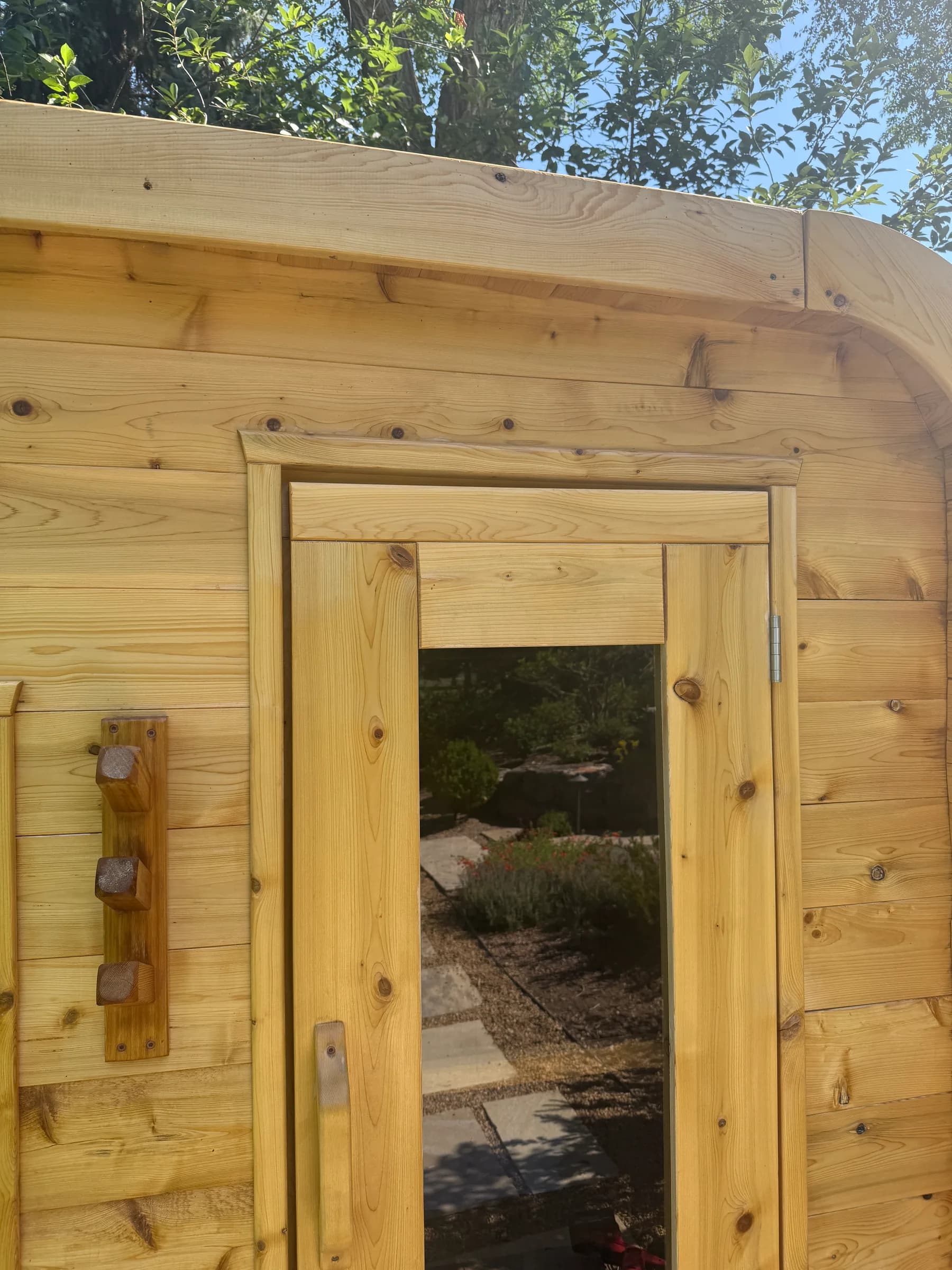
Thermal modification is a heat treatment applied to the wood before it is ever a board. It changes the material itself, which is why thermally modified wood moves less through the year and resists decay better than untreated cedar. The oil or stain applied over the top of that board is a separate layer, and it takes the same direct UV exposure that any exterior finish takes. Altitude tightens its recoat schedule the same way it tightens the schedule on any exterior wood in Colorado. A stable, rot-resistant substrate underneath is a genuine advantage on a Front Range install. Keeping the topcoat current is a separate job, and it still runs on its own schedule.
A schedule set for the site, not a generic calendar
We do not publish a fixed re-treatment interval, because altitude is only one variable and it never acts alone. On a Front Range install, several things move the number together:
- Elevation. Installations up in the foothills, well above seven thousand feet, see a faster schedule than installations in Denver proper, even a few miles apart.
- Orientation. A wall or roof face in full afternoon sun ages faster than a shaded north face on the same structure.
- Roof coverage. A deep overhang or a covered placement cuts direct UV exposure meaningfully compared with an unsheltered pad.
- Freeze and thaw exposure. A face that holds moisture through repeated freeze cycles is working against two forces at once.
Your specialist sets the cadence with you during your consultation, based on where the unit sits and which faces take direct sun. That is also where the seasonal rhythm described in wood, weather, and the seasons your sauna lives through gets tailored to your specific site instead of handed over as a generic calendar.
Frequently asked questions
Does elevation really change how fast an exterior wood finish fades?
Yes. Thinner air at higher elevation filters out less ultraviolet light before it reaches the surface, so wood at elevation absorbs more UV energy per hour of exposure than the same wood would under identical sun closer to sea level, which shortens the effective life of a finish rated under lower-elevation conditions.
Is this about altitude, or just about Colorado having strong sun?
It is specifically about altitude. A place can log plenty of sunny days without much elevation, and a place with fewer sunny days but sitting well above sea level still sees the atmospheric filtering effect on every one of them. The mechanism is the thickness of the air the UV passes through. Annual sunshine totals are a separate measurement entirely.
Does thermally modified wood need a different finish schedule at altitude?
Thermal modification changes the wood itself, making it more dimensionally stable and more rot resistant than untreated cedar, but the applied finish on top of it is still exposed to the same UV load. Altitude tightens the recoat schedule for that finish regardless of which wood species or treatment sits underneath it.
Bring photographs of the exposure your sauna sees, sun-facing walls included, and we will tell you what the elevation is going to ask of the finish schedule. Request member pricing, or call 720.780.4400 and start with the site.
David Drimmel, founder
Sauna Friend Sanctuary Supply is family owned and operated, and an integrated auxiliary of Bioharmony Collective, a mission-driven ministry. More about how we came to work this way.