Infrared or traditional: how to choose a home sauna
How the two kinds of heat differ, where each one fits in a house or a yard, and the questions we ask on a walkthrough before we point a member toward a Clearlight infrared cabin or a traditional room.
5.0 on Google across 80+ verified reviews
Choose infrared if the room will live indoors, the space is tight, or you find hot air hard to sit in. Choose traditional if the room will live outside, you want the heat and the steam off the stones, or several people will use it at once. A traditional room reaches roughly 170 degrees Fahrenheit in about an hour. An infrared room reaches roughly 130 degrees Fahrenheit and above. The two feel different, and most members know which they prefer after one session.
That is the short answer. The rest of this page is what we look at on a walkthrough before we settle it.
What is the difference between infrared and traditional heat?
A traditional sauna heats the air. A heater loaded with stones warms the room, and when you pour water on the stones you get a burst of steam. The whole room gets hot, the benches get hot, and you sit in it.
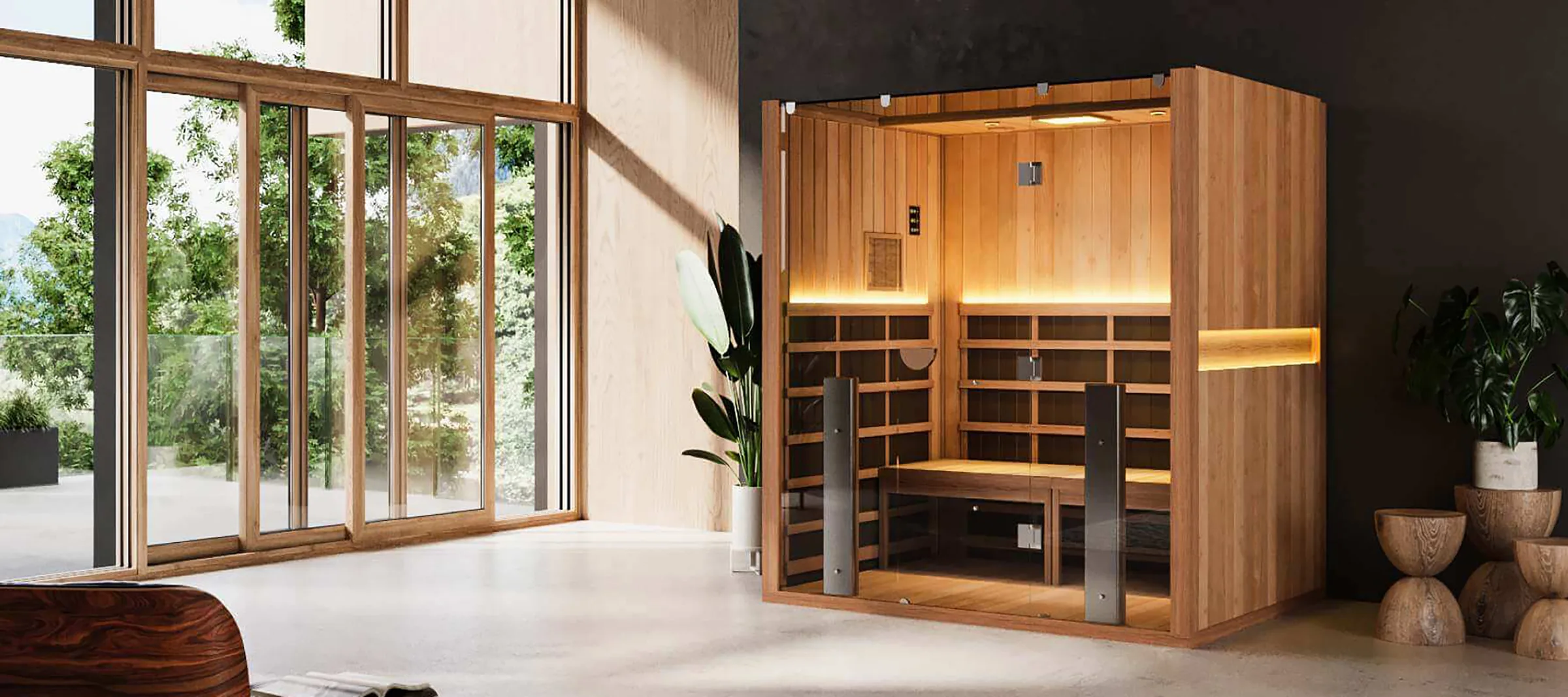
An infrared sauna warms you directly. Panels in the walls give off infrared light, your skin absorbs it, and your body warms from that. The air in the cabin stays cooler than in a traditional room. There are no stones and no water.
Both make a good sauna. Which one suits you depends on the house, the yard, and the person sitting in it.
Where will the room go?
This question settles more projects than any other.
Infrared is built for indoors. A Clearlight cabin goes into a spare bedroom, a basement, a corner of a primary suite, or a garage that has been finished out. The Clearlight Premier 1 fits a corner where a full sauna room would not. The Sanctuary 2 and Sanctuary C corner cabin give you more bench. We check the doorway the panels have to come through, the floor it will sit on, and the path from the front door to the room.
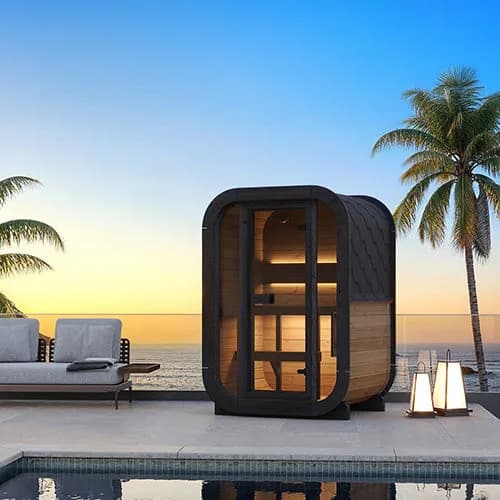
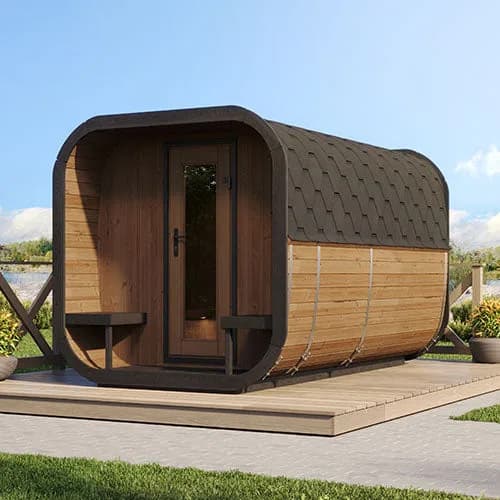
Traditional rooms are built for outside. The wood, the heater, and the venting are made for weather. A barrel, a cube, or a cabin goes on a prepared pad in the yard. Traditional rooms can go indoors too, as an indoor sauna built into a room of the house, which brings its own list of questions about venting and moisture.
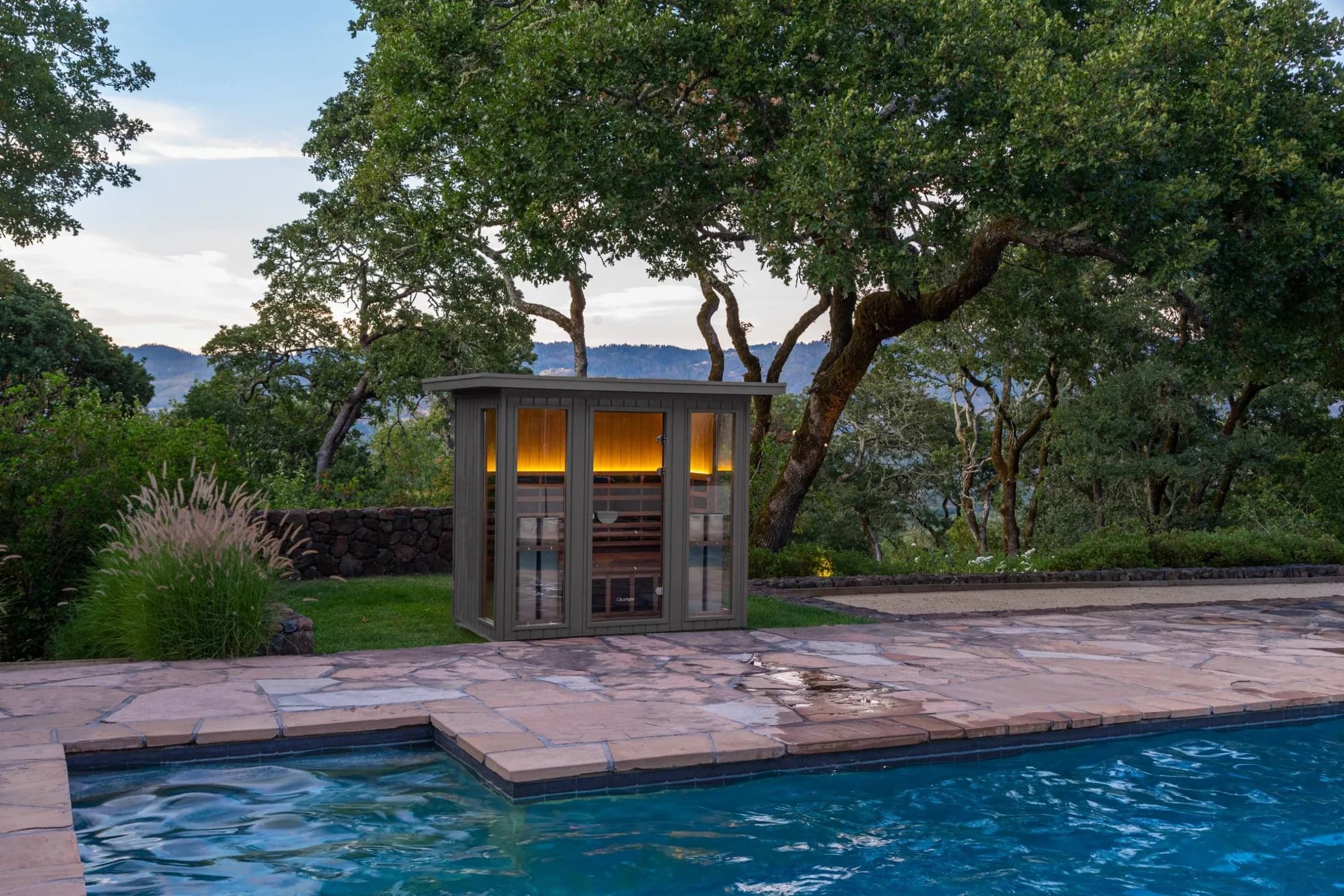
Clearlight does build an outdoor variant, the Sanctuary Outdoor 2 and the Sanctuary Outdoor 5. If you want infrared in the garden, we talk it through on the walkthrough with the spot in front of us.
How does each one feel?
Traditional heat is hot air, and you feel it the moment the door opens. Water on the stones raises the humidity and the heat you feel on your skin. Some people love that. Some find it hard to breathe in, and they leave early.
Infrared is gentler on the air. You warm up from the skin in, and you can sit longer in a room that feels less intense. Members who have tried a traditional sauna at a gym and did not enjoy it often find infrared suits them.
If you have never sat in either, try a session in each before the walkthrough. What you notice in that first session is worth more to us than any spec sheet.
How many people will use it?
A household that uses the sauna one at a time, after work, points toward a compact infrared cabin or a small outdoor room. A household that gathers, or hosts friends, points toward a larger traditional room with an upper bench and space to stretch out. We ask what a normal week looks like a year from now, and we size the room to that week.
What about wood and sensitivities?
Clearlight builds in western red cedar with a mahogany exterior, or in basswood. Basswood is the choice for members who react to scent or resin. It is nearly odorless and even grained. On an outdoor traditional room, the wood choice follows the climate the room lives in, and we cover that in barrel, cube, or cabin.
What does the house need?
What either room needs from the house is assessed on your property, and our team will assess this with you during the consultation. Our electrical coordination service holds the schedule so that part is done when the crew arrives.
A traditional room also needs a heater matched to the room. We work with Harvia, HUUM, and others, and sizing is done by us against the room itself. The heater guide walks through the models, and the Harvia KIP is our workhorse.
A short way to narrow it
- Name the spot. Indoors points toward infrared. Outdoors points toward traditional.
- Sit in both if you can, and notice which one you want to stay in.
- Count the people on a normal night.
- Tell us about anyone in the house who reacts to scent or resin.
- Bring the rest to the walkthrough.
You can browse the full infrared range in our infrared collection and see how we build in Southern California, where both kinds of room are common and placement is often a design decision.
Talk it through with us
We represent you, not the manufacturers, so we point you at the room that fits your house. Call 720.780.4400 for a free estimate, or have us walk your space.
David Drimmel, founder
Sauna Friend Sanctuary Supply is family owned and operated, and an integrated auxiliary of Bioharmony Collective, a mission-driven ministry. More about how we came to work this way.